
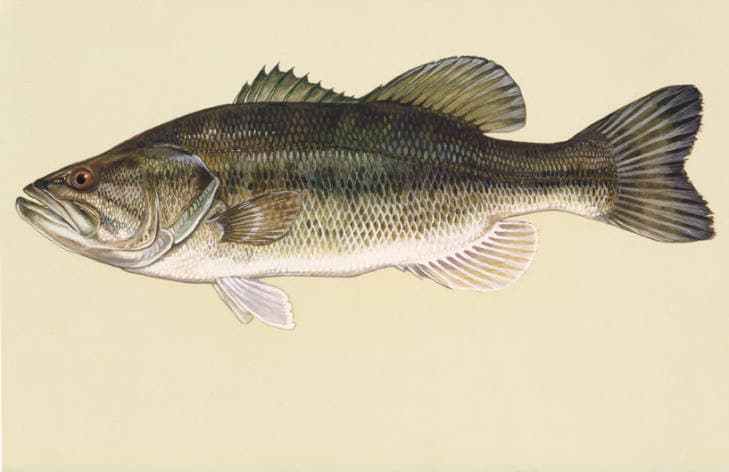
 Follow the jaw past the eye.
Look at the closed jaw
On a largemouth bass, the upper jaw reaches behind the eye. Compare that feature with the dark side stripe and the deeply notched dorsal fin. A nickname or green color is not enough.
Give yourself one clear starting point
TPWD describes largemouth using cover such as vegetation and submerged objects. For a beginner exercise, choose one safe place to fish and one visible kind of cover. Note what you can actually see, rather than deciding there must be fish under it.
Soft plastics, jigs, spinnerbaits and crankbaits are established bass options in TPWD’s basic fishing guide. You do not need to master them all at once. Our suggestion: start with one presentation you can control, keep the casting area clear and record how you retrieved it.
Make a comparison you can remember
- Write down the lure and the cover you fished.
- Record your actual fishing time and the result, including zero.
- Change one part of the presentation and describe that change.
This is a learning routine, not a promise about which lure will work. Conditions and fish location vary.
Check your understanding
Which feature helps identify a largemouth bass?
References: TPWD largemouth bass and Fish Texas basic fishing guide (technique reference, not current regulations). Checked September 6, 2026.